Frequently Asked Questions.
Tree surgery and arborist services can be a prickly business, so it’s natural to have some questions about what we do here at The Tree Fella. Take a look through our comprehensive FAQs for all the information you need about us, our services, and general tree care.
Tree Surgeon and Arborist FAQs
What is a tree surgeon?
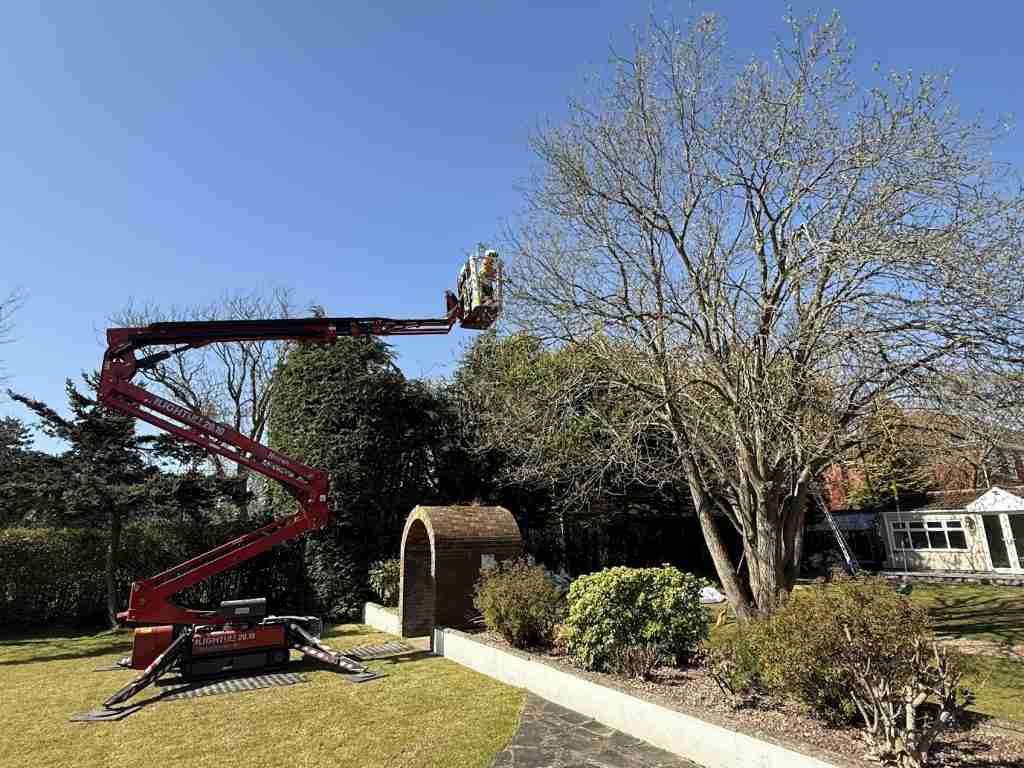
A tree surgeon is like a tradesperson for trees. They are skilled and trained to climb trees, use chainsaws, and work at height to cut back branches, make trees safe, or take them down when needed. Yep, it’s just as cool as it sounds.
What does a tree surgeon do?
Tree surgeons take care of trees, just like surgeons take care of humans! Common examples of tree surgeon services include local tree removal services, hedge cutting services, tree stump removal, and commercial tree work. Some are even qualified to do tree safety inspections.
What is an arborist?
Arborists are specialists in the science behind tree care and management. Arborists apply these scientific foundations to their work, whether that involves conducting practical tree work, diagnosing tree diseases, or conducting surveys.
What is the difference between a tree surgeon and an arborist?
Tree surgeons specialise in the practical, physical side of tree care, while arborists carry out the physical work with a greater awareness of the science behind managing trees. The terms are often used interchangeably, and a good understanding of their academic qualification is usually the best way to tell them apart.
Are all arborists certified?
No, not all arborists are certified — sadly, certification isn’t a mandatory requirement for arboricultural services in the UK. At The Tree Fella, we are professional tree surgeons, Arb Approved Contractors, members of the Arboricultural Association, and a TrustMark accredited business. These are the key industry accreditations to look out for when engaging a tree service contractor.
Do tree surgeons need a license?
In the UK, there is no mandatory, overarching tree surgeon’s license. However, all tree surgeons will need to have specific qualifications and licenses for certain activities, such as tree felling, using a chainsaw, or disposing of tree waste. It’s often claimed that NPTC or City & Guilds certification is sufficient. Whilst these “tickets” might make someone safe with the tools, always look for a minimum Level 3 Diploma in Arboriculture for tree work, and minimum Level 4 Diploma for consultancy services.
What services can a tree surgeon offer?
Tree surgeons offer a range of services, including tree chipping, tree health diagnoses, tree removals, and hedge cutting. If it’s to do with a tree, a tree surgeon can do it!
Can arborists assess the health of my tree?
Yes, professional, Arb-Approved arborists can confidently conduct tree surveys, risk assessments, and inspections for pests or diseases. Always check they’ve got at least a Level 4 Diploma in Arboriculture, a Professional Tree Inspection qualification, and Professional Indemnity insurance.
Do arborists and tree surgeons remove trees?
Yes, tree removals are one of the key services offered by any arborist or tree surgeon. A professional arborist or tree surgeon can safely conduct large tree removals while minimising the risk of re-growth with as little disruption to the surrounding area as possible.
What qualifications should I look for in an arborist?
Whether you choose The Tree Fella or not, we want you to find the best professional for your tree work. Check that they:
Are ARB Approved
Are fully insured
Have clear evidence of relevant experience and health and safety knowledge
Who is the Arb association?
The Arb association is the Arboricultural Association — the UK’s industry body for tree-care professional contractors. They run the Approved Contractor (AC) scheme.
What is an Arb Approved Contractor?
An ARB Approved contractor is a business that has been extensively and independently audited for their work quality, health and safety adherence, customer service, and environmental performance.
Tree Service Costs FAQs
How much do tree surgeons charge?
Tree surgeons charge different rates depending on location, tree size, access challenges, risk, urgency, and waste disposal needs. For a quote from a tree surgeon in the North East, please don’t hesitate to contact us today by calling 0191 432 6167.
What is the cost of removing trees in the UK?
The cost of removing a tree depends on its size and the complexity of the removal. For example, a simple single tree removal can cost upwards of £300, and multiple high-risk, challenging-access tree removals could cost thousands.
What factors affect the price of your services?
To give you the most accurate tree surgeon quote, we will consider:
Tree size, species, and location
Site access difficulty
Safety risks
Waste removal needs
Specialist equipment
Is tree work covered by insurance?
The best and most professional tree surgeons and arborists will carry public liability and employer’s insurance — which we have! We recommend verifying this with your chosen contractor before agreeing to any work.
Is waste removal included in the price, and what do you do with the branches and wood after cutting?
Yes, the cost of waste removal will be included in your quote, provided you confirm that this is a service you require.
At The Tree Fella, we remove all branches by hand and chip them with our woodchipper. We then remove the wood chips from the site to be used as a coal alternative at Drax Power Station. We’re one of the few tree surgeons who do this!
The Tree Fella FAQs
What areas do you cover?
Our tree surgeons are based in South Tyneside, Newcastle, and cover everywhere from Peterlee and Chopwell to tree surgeons in Whitley Bay. Call 0191 432 6167 to find out whether you’re in our service area.
What tree services do you offer?
At The Tree Fella, we offer a range of services, including tree removal, tree pruning, stump removal, stump grinding, hedge cutting, and more.
Are your arborists qualified and insured, and what certifications do The Tree Fella team have?
Yes, we are fully insured and qualified. We have been marked as Arb-Approved contractors and as South Tyneside Safe Traders. Our staff also have enhanced DBS checks for your peace of mind.
Do you carry out tree surveys and risk assessments?
Yes, we are fully qualified and skilled in offering tree surveys and tree risk assessments.
Do you offer any additional assessments?
We can also conduct:
Pre-development tree surveys
Tree constraint plans
Arboricultural impact assessments
Tree protection plans
Arboricultural Method Statements (AMS)
Do you offer free quotes or consultations?
We offer free assessments and free quotes for all of our tree maintenance services. Book a site visit today.
Do you provide emergency tree services?
Yes, we can be on hand in the event of a tree emergency in Newcastle. Call us on 0191 432 6167 right away and we’ll see how we can help.
General FAQs
Is tree removal dangerous?
Yes, tree removals can be dangerous, especially when they involve working at height, using hazardous equipment, or navigating complex access issues. This is why it’s always best to get a trained professional to remove a tree.
Can you remove trees close to buildings or power lines?
Yes, specialist arborists and tree surgeons will be able to remove trees close to buildings or power lines safely, but they must have all the essential planning and permit permissions as well as insurance.
How do I know if my tree is diseased or dying?
If your tree is diseased or dying, you may find that the leaves look discoloured or that the bark is beginning to crack or peel. The affected tree may also wilt and exhibit premature leaf fall or dying branches. One of the main signs of a diseased tree is spotting visible signs of fungi or decay.
Do I need permission to cut down a tree?
You can only fell (cut) trees without prior permission if it is under 7.5cm in diameter or if it is posing an immediately dangerous safety risk. Many trees are within conservation areas or have Tree Preservation Orders (TPOs), so it’s always worth checking with your local authority before conducting any work.
When is the best time to prune a tree?
Generally, the best time to prune trees is during their dormant season, which typically occurs from late autumn (November) to early spring (early March). However, this depends on the species of tree and the activity of pests and diseases, See our blog post on Silver Leaf Disease for more information about how to tell if a tree is diseased.
How often should a tree be inspected for safety?
High-risk trees (near power lines or buildings) or public trees should be inspected annually. Private, domestic trees should be inspected every three to five years or after heavy storms.
Can tree roots damage my property?
Yes, tree roots can cause indirect property damage via subsidence (sinking or shifting) and direct property damage by growing into drains or foundations. Unmanaged tree roots can also lift paving slabs.
Is it safe to trim a tree myself?
It’s always best to hire a professional tree surgeon to get the job done safely, ensuring your tree stays healthy and lasts a lifetime.
How can I prevent tree-related incidents?
To prevent tree-related incidents, stay on top of a regular tree inspection schedule, practice proper pruning and maintenance, and have the contact information of a local, trusted tree surgeon handy in case of an emergency.
Does a tree owner have to pay for any work if a neighbour has an issue?
Usually not, but it depends on who’s doing what and whether the tree has actually caused damage.
Under English law the position is roughly this:
Encroachment (branches/roots crossing the boundary). A neighbour has a common-law right to cut back branches or roots that cross onto their property, back to the boundary line. But that’s their right to exercise at their cost — the tree owner isn’t obliged to do it or to pay for it. The neighbour must offer the cuttings back to the tree owner (they technically remain the owner’s property) and cannot enter the owner’s land to do the work without permission.
Nuisance / actual damage. If the tree causes actual damage — subsidence from root action, structural damage, blocked drains, a dangerous falling limb — the tree owner can become liable. Liability generally turns on whether the owner knew or ought reasonably to have known of the risk and failed to act. That’s where the owner may have to pay: for the remedial works and potentially the neighbour’s losses. Mere shading, leaf fall, blocked light, or a view being obscured is not normally actionable nuisance.
Duty of care. An owner has a general duty to take reasonable care that their tree doesn’t injure people or damage neighbouring property. Ignoring a known defect (e.g. an obviously dead or diseased tree) shifts cost and liability toward the owner.
Constraints that override all of this. A TPO or conservation area means neither party can lawfully cut without consent regardless of who’s paying. Always check before any work.
So: a neighbour who just wants a tidier boundary bears their own costs. An owner whose neglected or defective tree causes real damage can end up paying.
For a live dispute or an actual damage claim, the specifics matter and a solicitor or arboricultural consultant’s report is worth getting.
Tree Care FAQs
What are the signs of a healthy tree?
A healthy tree will have a full, bustling canopy, lots of new growth, intact bark, and no sign of fungus or cracks.
What pests affect trees?
Some of the most common pests that affect trees include borers, beetles, caterpillars, and aphids. Some diseases also qualify as pests, such as Ash Dieback fungal disease.
How do I identify a pest infestation on my tree?
If your tree has been infested by pests, you may find holes in its leaves or bark, discolouration, and unusual growths. If you look hard enough, you may even see the pests, their eggs, and evidence of frass from wood-boring!
Are there natural and safe ways to deal with tree pests?
Yes, there are definitely ways to prevent tree pests, like prioritising tree health and regular monitoring. Some popular natural pest control methods include horticultural oils, encouraging natural predators, and companion planting, but depending on the extent of the infestation, these may not solve the issue.
Can I treat tree disease myself?
We don’t recommend treating tree disease on your own, as this can lead to misdiagnosis and safety hazards, which could cause your tree to deteriorate even more. Always contact a local arborist if you think your tree has a disease.
What are some key signs of tree disease?
The most common signs of tree disease include unusual bark patterns, dead branches, the presence of fungi and growth, and unusual leaf colour or shape.
How will I know if a tree needs to be cut down?
If your tree is leaning, structurally unstable, poses a safety risk, or shows severe signs of pest or disease infestation, then it’s probably time to book a tree removal.
What should I do if my tree is leaning?
If your tree is leaning, you should first determine whether it poses a safety hazard. If it’s a young tree, you may be able to stake it to repair the lean. For older trees, you can try pruning, but you may need professional help or even a removal if it is classed as dangerous.
How do I protect my trees during harsh weather conditions?
To protect your tree during windy or frosty weather, apply a thick layer of mulch to insulate the roots, and wrap the tree if possible. We also recommend pre-watering before the ground freezes and pre-pruning any dead or weak branches.
What should I do if my tree gets damaged in a storm?
If your tree has been severely damaged in a storm, call a reliable, local tree surgeon as soon as possible to conduct a safety inspection. They can help assess its structural stability and perform any necessary repairs.
How do I extend the lifespan of my tree?
To keep your tree looking full and beautiful for years to come, prioritise watering, pruning, fertilisation, and monitoring for pest and disease control. An activity as simple as routinely putting 5-10cm of woodchip around the base of the tree can decompact the soil, add organic matter, improve nitrogen and oxygen levels and make water more available to the tree.
When is it time to call a tree surgeon or arborist for a sick tree?
We recommend calling a tree surgeon as soon as you spot any visible signs of tree damage or structural issues. The more notice we have, the more likely we can save your tree.