
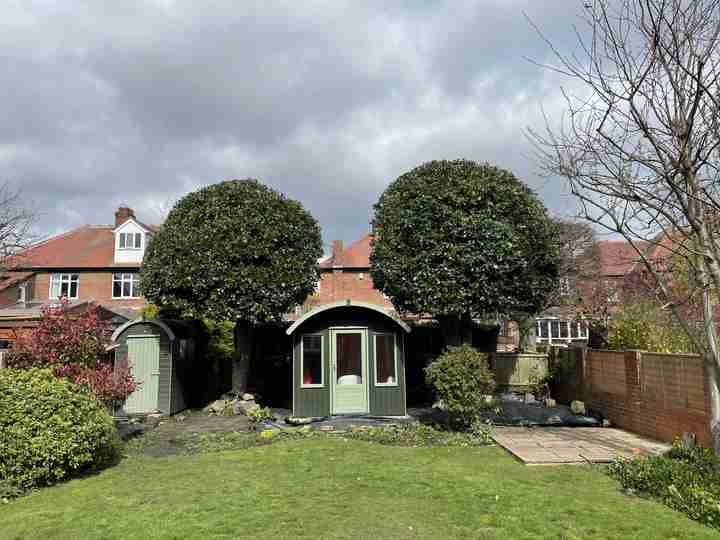
If you want to improve the structure and appearance of your treasured tree, you’ll need to become a tree pruning pro.
One essential part of being a master in tree pruning is knowing when to prune your trees, as different types of trees have their ideal pruning times throughout the year. With this in mind, you can’t prune all of your trees at the same time of year and expect tree-riffic results every time, especially if you have trees of different species.
Read on to learn more about the ideal pruning times of different tree species.
Quick recap: What is tree pruning?
Before you learn about the best time to cut back your trees, it’s essential to know what you’re doing first!
Tree pruning involves removing specific parts of your tree, like its branches, buds, and roots, and there are many different types of pruning you can carry out:
- Thinning: Selectively removing branches to open up a tree’s canopy.
- Heading: Cutting back the ends of branches to a bud. This encourages bushier growth and controls size.
- Pollarding: Regularly cutting back to the main trunk or limbs to reduce the size of a tree.
- Crown raising: Removing lower branches to lift a tree’s canopy and improve access or visibility from beneath.
- Crown reduction: Shortening branches to reduce weight and volume while maintaining shape to reduce the overall size of a tree’s canopy. This is how to trim a tree that is too big.
Each method highlights the varied benefits of pruning trees. It’s not a one-size-fits-all kind of technique, which is why you’ll need to be clued up or ask a professional tree surgeon to conduct the work for you. For a specific pruning method, see our ‘what is target pruning‘ guide.
When to prune your trees in the UK
With over 60 native and 100 non-native tree species in the UK, it shouldn’t be a shock to hear that there’s no ‘best’ time for tree pruning. This is because the best time to prune your tree depends on its type and what you want to achieve from the pruning process.
Deciduous trees
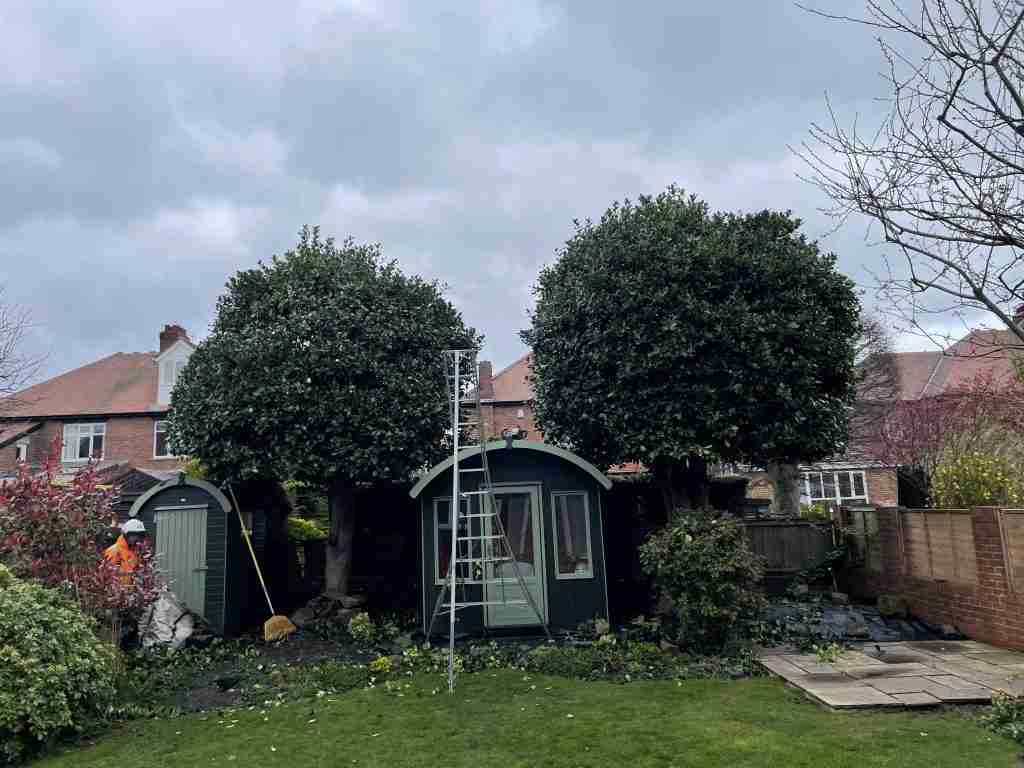
Deciduous trees shed their leaves (usually in autumn) every year, with common examples being oak, beech, birch, and maple. The most commonly accepted timeline is to prune them in late winter to early spring, or February to April, when the tree is still dormant, as this will allow the pruning cuts to heal and recover before the tree begins its new growth cycle in spring.
However, there is an argument for pruning over the summer when the tree is actively topping up its energy levels and actively growing; meaning it could heal (or compartmentalise) a quicker!
You’d be best booking online to arrange a visit from our tree-fessionals!
Evergreen trees: May to July
Evergreen trees like pine, holly, and cedar keep their leaves throughout the year. Pruning in late spring to early summer reduces the risk of frost damage and encourages healthy regrowth.
Flowering trees: After blooming
As you experts will know, flowering trees can either be deciduous or evergreen. This can make pruning timelines a bit more prickly, but the general rule is to go by its flowering season.
Spring-flowering trees like cherry, magnolia, and lilac should be pruned after blooming has finished to reduce the risk of removing next year’s flower buds.
On the other branch, summer-flowering trees like hawthorn and elder should be pruned in late winter or early spring before new growth has taken place, as they tend to flower on new wood.
When is the worst time to prune trees in the UK?
The worst time to prune a tree is generally from August to November, specifically for flowering trees, right before they bloom. It’s also best to avoid pruning in frosty or wet weather, as these conditions can slow down a tree’s healing process and increase the risk of fungal infections (yes, trees can get poorly, too!). Silver leaf disease is a big threat to these trees! For further information on how to tell if a tree is diseased take a look at our guide.
Pruning in late summer to autumn can leave new shoots susceptible to frost damage, increase the risk of tree disease and decay, and encourage sap bleeding, which can weaken the tree.
It’s not straightforward is it! Book online to arrange a visit by our professional arborists.
When to prune different types of fruit trees
When pruning fruit trees, use these recommended time frames to reduce the risk of stunted growth, uneven shaping, tree disease, and poor fruit production.
- Pruning apple trees and pear trees: Winter (November to February) for shaping and structure, and summer (late July to August) for size control and fruit production.
- Pruning plum trees and other stone fruit trees: Mid to late summer (July to September) to reduce the risk of silver leaf disease (common in stone fruits).
- Pruning fig trees: Late winter (February to early March) for removing dead or overcrowded growth, and summer (June to July) for managing size.
- Pruning olive trees: Late spring (May to June), when all frost has passed, to encourage sun exposure, improve airflow, and control shape.
- Pruning lemon trees and other citrus trees: Early spring (March to April) before new growth begins.
Contact The Tree Fella for all your tree pruning needs
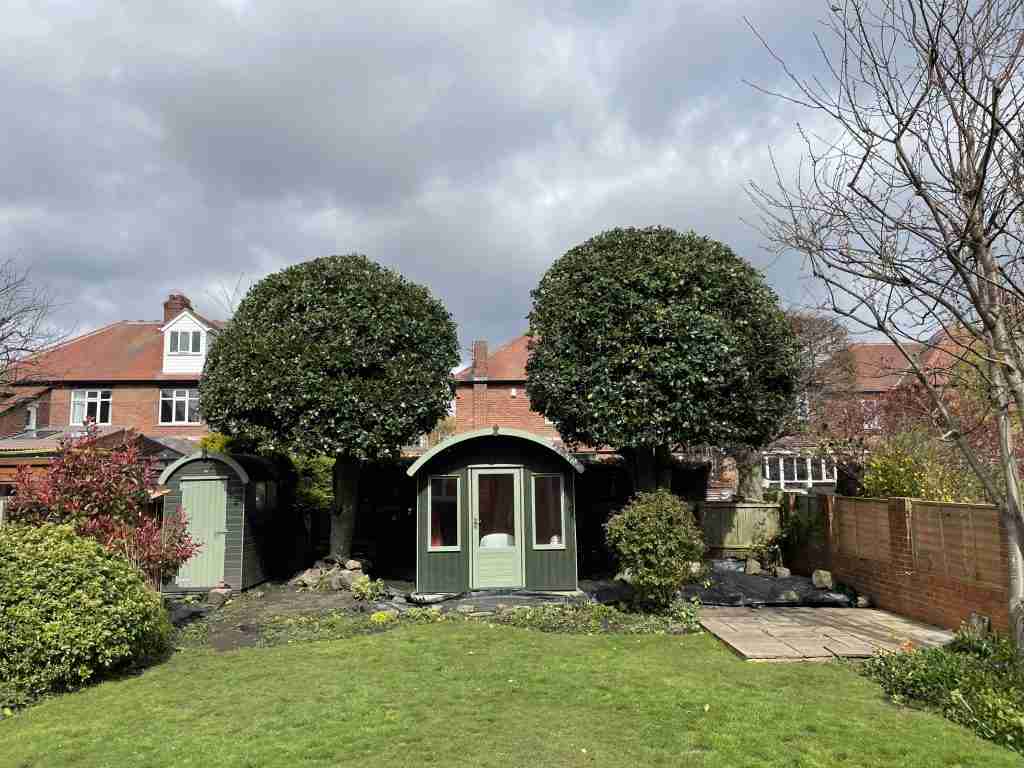
If you’re looking for a professional tree pruning service, don’t hesitate to get in touch with our friendly team at The Tree Fella.
We’re proud to be the highest-rated Arb Approved tree surgeons in the North East, and boast over 500 five-star reviews — so you can trust that we know what we’re talking about! As well as tree pruning services, we can also help out with:
- Tree removals in Newcastle
- Commercial tree services in Newcastle
- Local stump removal service
- Tree safety
- Hedge trimming in the North East
From a tree surgeon in Gateshead to tree services in Washington, our qualified arborists are on hand wherever you’re based in the North East. Book online or call 0191 432 6167 today to discuss the work you need carried out.