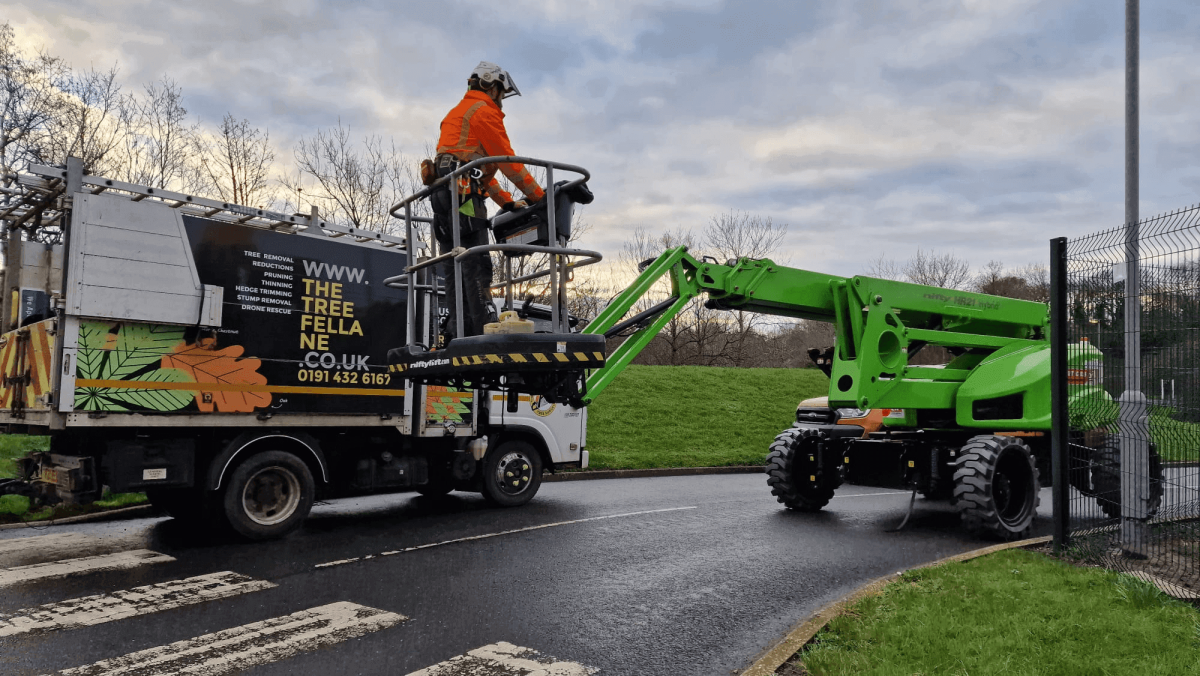
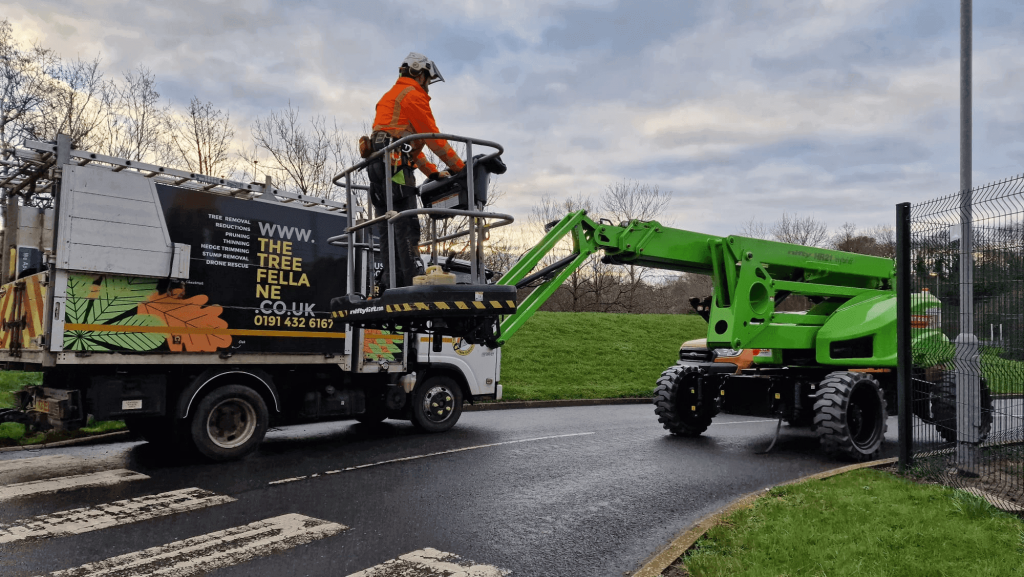
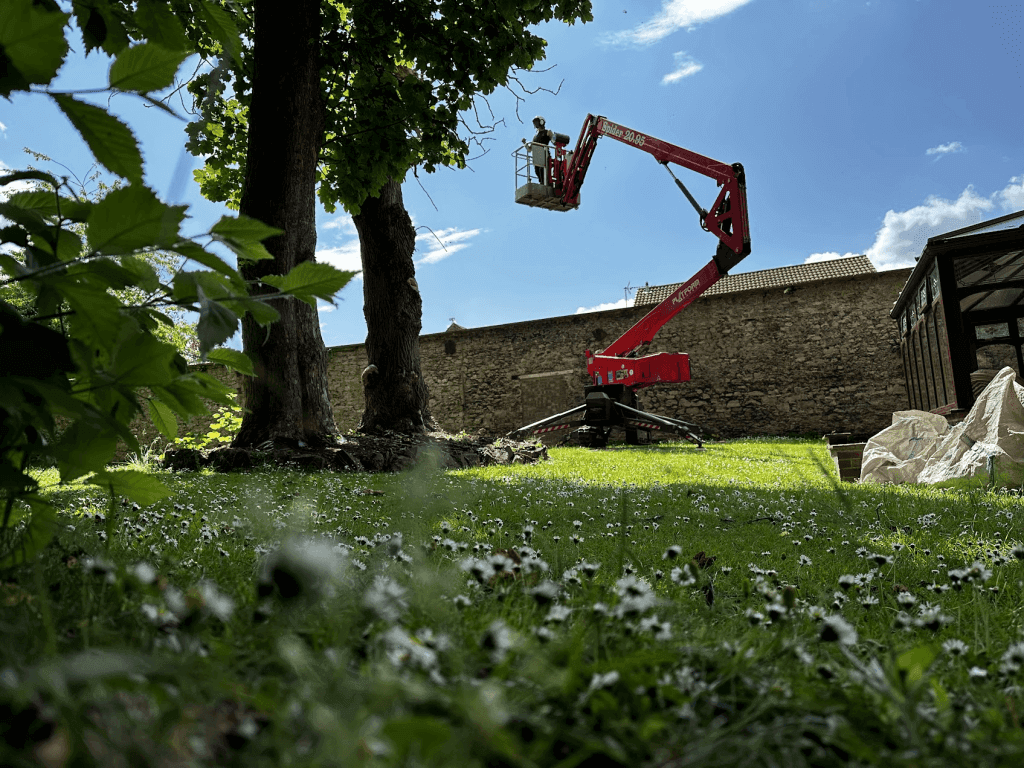
A MEWP, or Mobile Elevated Working Platform, commonly known as a ‘cherry picker,’ is a versatile machine used for tree pruning, tree removals, hedge trimming, and other elevated tasks. It provides a secure platform for operators to work at heights while minimizing the risk of falls.
MEWPs have revolutionised tree work by providing safe and efficient access to heights for tree pruning and removal, as well as hedge cutting work. Understanding the advantages and safety precautions of using MEWPs is crucial.
To operate a MEWP, it is essential to be a qualified IPAF operator to ensure safety and proficiency. IPAF are an industry body for powered access. All of our operators are IPAF registered, certified and competent thanks to our friends at Tyne & Wear Access.
Benefits of Using MEWPs for Tree Pruning & Tree Removal
- Enhanced Safety:
- MEWPs offer a secure working platform, reducing the risks associated with tree climbing and traditional Arboricultural methods.
- Operators and ground trained staff can work confidently at height, minimising the chances of accidents.
- Fall protection systems, such as harnesses, are secondary to collective protection measures when using MEWPs1.
- Time Efficiency:
- MEWPs significantly reduce the time required to access tree crowns. Quick setup and precise positioning allow for efficient target pruning of woody vegetation.
- Arborists can complete more jobs in a day, maximizing productivity and profitability2.
- Accessibility:
- Urban tree work often involves tight spaces and obstacles. MEWPs can navigate these challenges, providing access to trees overhanging buildings, roads, or other structures.
- Diseased or dying trees, where traditional climbing is difficult, become accessible with MEWPs1.
- Reduced Physical Strain:
- Climbing trees manually can be physically demanding. MEWPs eliminate the need for strenuous effort, allowing operators to focus on pruning tasks.
- Less fatigue means fewer breaks, leading to improved overall productivity2.
- Obstruction-Free Work:
- MEWPs are ideal for situations where tree work might obstruct pedestrian pathways, traffic, or neighbouring properties.
- By minimizing disruption, MEWPs enhance community safety and goodwill2.
Safety Considerations
When using a MEWP for tree work it’s really important that the operator is competent and qualified. All our staff work to the guidance issued by the Arboricultural Association, Technical Guide 5. Here’s a look at some important safety considerations of tree work from a cherry picker.
- Stability and Load Limits:
- Properly maintain MEWPs to prevent toppling incidents. Overloading or neglecting maintenance can compromise stability.
- Always adhere to manufacturer guidelines regarding load capacity and weight distribution.
- Ground Conditions:
- Assess the ground where the MEWP will be positioned. Uneven or soft terrain can affect stability.
- Use stabilizers or outriggers to ensure a level and secure base.
- Operator Training:
- Only trained and certified personnel should operate MEWPs.
- Familiarize yourself with the controls, emergency procedures, and safety features.
- Fall Prevention:
- While MEWPs provide a secure platform, operators should still wear harnesses and lanyards.
- Secure tools and equipment to prevent accidental drops.
- Environmental Factors:
- Wind, rain, or snow can impact MEWP stability. Monitor weather conditions and avoid operation during adverse weather.
- Be cautious near power lines and other overhead hazards.
If you’re looking for a professional team of arborists who embody height standards and the safe working practices outlined above, give us call.