
Losing a tree can make a big difference to your garden, especially if it blocks out road noise or an unattractive view. Unfortunately, there are times when tree removal services are the best remedy. Knowing how to tell if a tree is dead or dying can help you work out the best course of action — to fell, or not to fell?
What causes a tree to die suddenly?
Sometimes, newly planted trees and shrubs can fail to thrive. But diseases can cause even the most grand and established tree to die suddenly. From soil-borne diseases like honey fungus to box blight, bacterial canker, and bracket fungi, these lurgies can set in quickly and are easy to overlook until it’s too late.
Diseases aren’t the only danger to your trees, though. Root damage is another problem, and can occur if you relocate a tree at the wrong time, or if it’s disrupted by driveway construction or other building works; usually linked to compaction of the soil.
Then there’s too much or too little moisture — drought and waterlogging can both cause stress in trees, which can lead to the death of a previously healthy plant.
How to tell if a tree is dead or dormant
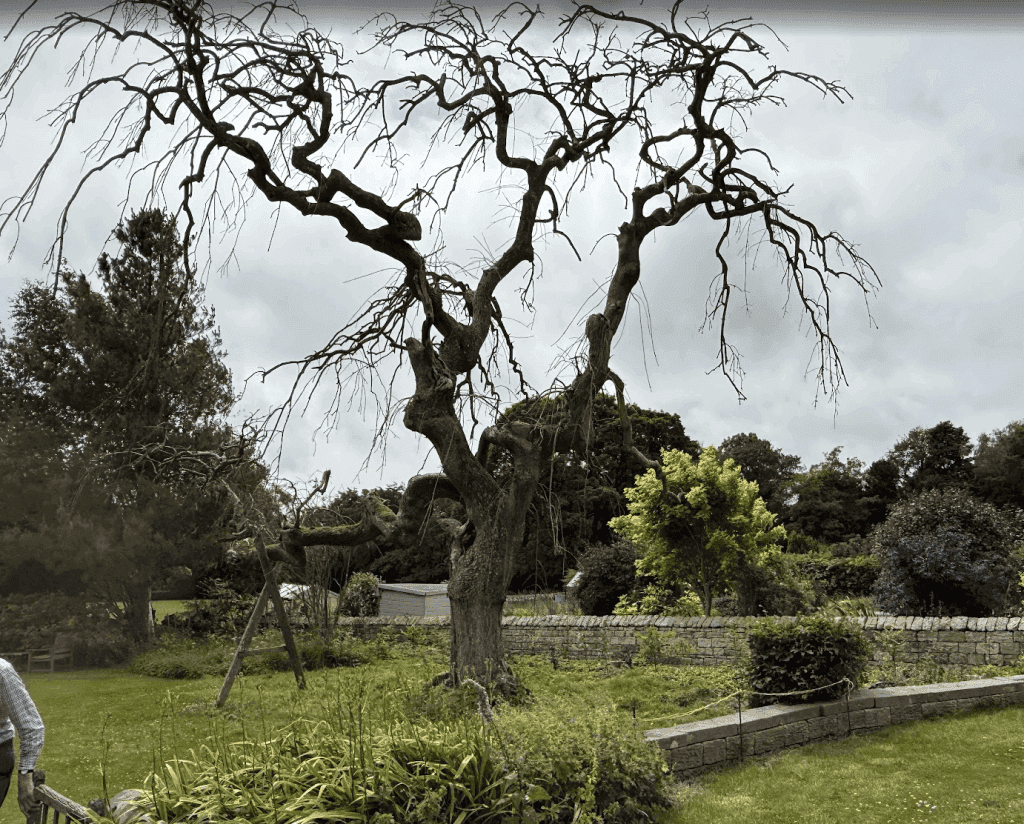
It’s not always obvious that you have a dead or dying tree in your garden. After all, if a tree has no leaves, it isn’t necessarily dead, but may be a deciduous species, such as oak, maple, or beech.
What can be more challenging is identifying dying tree symptoms for your evergreens or palm trees. Which means that knowing how to tell if a tree is dead or dormant could prevent you from making a costly mistake.
Here are a couple of straightforward tests you can perform if you’re not sure whether your tree is on its last legs:
- The scratch test: Scratch the bark with your nail or a penknife. If the bark is flaking, peeling and brown underneath, or there are dead branches in the canopy, the tree is probably dead. If your tree is dormant, the bark underneath will be green, indicating it’s still alive.
- The fungus test: Mushrooms around the base of the trunk or on the trunk or branches can indicate a dead tree or dying tree.
- The bud test: Multiple branches with no living buds are another sign your tree is dead, rather than dormant.
How to tell if a tree is dying
Have you noticed multiple leafless branches around your tree? Are there signs of infection or unnaturally protruding roots? Or is your tree simply suffering from old age?
Some species, such as Douglas Firs, can live for hundreds of years, while some ornamental fruit trees may only have a lifespan of 25 years. If your tree is at the end of its lifespan, it’s likely to succumb to pests and disease more easily.
If your plant is showing signs of life, for instance, there are new buds and shoots, leave it until spring and see if it recovers. Otherwise, contact our team of tree surgeons in Newcastle, and we’ll be happy to advise on tree safety.
How to save a dying tree
If you performed a scratch test and found signs of growth, congratulations! With help from a professional arborist, you can nurse your tree back to health.
Adding nutrients, mulching and providing the right amount of water can put your tree on the road to recovery. We also recommend our local tree pruning services to remove any dead, diseased or decaying branches to prevent any issues from spreading.
Signs that a tree needs to be cut down
A tree doesn’t always need to be dead or dying to present a risk. Here’s why you may decide to have a tree cut down:
- It’s leaning and is at risk of falling over and causing damage to people and properties.
- The roots are showing visible signs of decay or damage, and the tree is unstable.
- Storms, heavy winds, lightning and snow have caused significant damage.
- Poor pruning has resulted in an unusual shape and weak branch growth.
- The tree is close to your property.
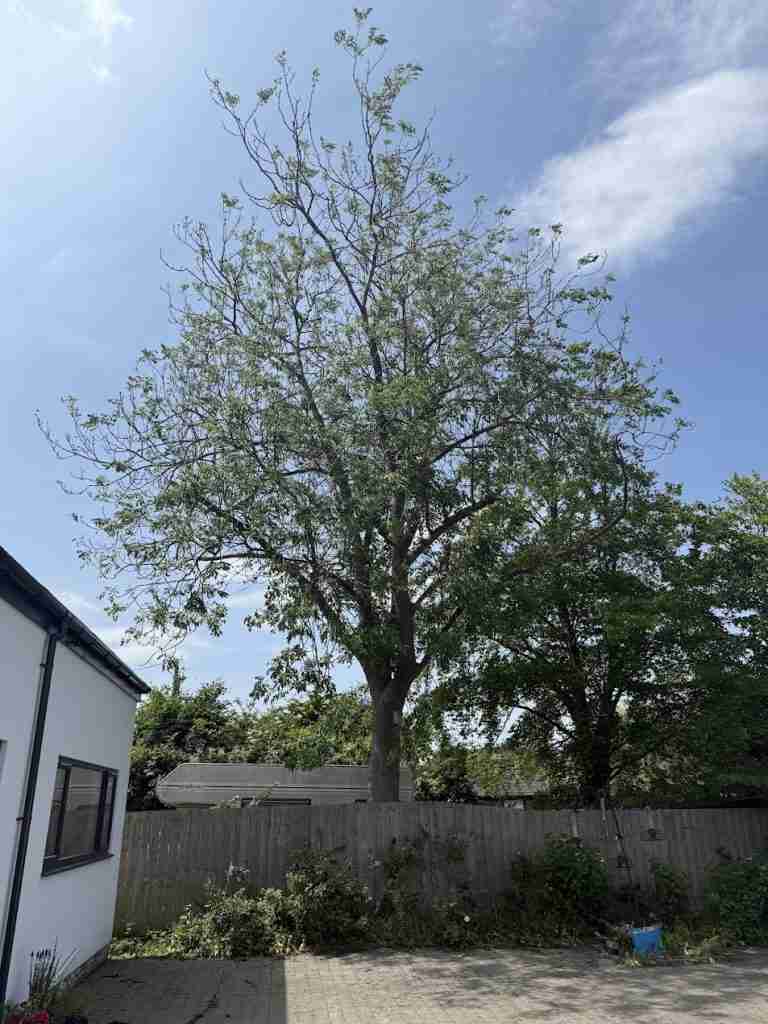
Can you cut down a diseased tree yourself?
Cutting down trees, whether healthy or diseased, is a specialist job for good reason. Dead tree removal is a process that requires precision, and getting it wrong could result in a bad accident or damage to a neighbouring property.
When it comes to felling a diseased tree, there are additional complexities to consider. A weakened tree may shed branches as it’s felled, or it may need to be disposed of in a specialised manner to prevent the spread of disease.
Even if you do manage to remove a small tree yourself, you’ll need professional tree stump removal to ensure any root and soil-borne infestation doesn’t spread to the rest of your plants.
Is it time to call a professional? Trust the Tree Fella
If you’ve noticed signs of a diseased or dying tree, it’s time to call in the professionals. Contact us today, and we’ll be happy to help with everything from hedge trimming to tree removal.
At the Tree Fella, we specialise in tree maintenance services to keep your outside spaces healthy and risk-free. As the highest rated tree surgeons in the North East, you can trust us to deliver the highest standards, every time. Book your online quotation or call us today.
Whether you need a tree surgeon in Washington, a tree surgeon in Sunderland, or tree services anywhere else across the North East, get in touch with The Tree Fella team today by booking online or giving us a call on 0191 432 6167.